wander (v.)


The post To Wander appeared first on Poached Egg Woman.
The post To Wander appeared first on Poached Egg Woman.
 I return again and again to the same part of Pheasant Creek, in different seasons, at different times of day. I have learned where the wild bergamot flourishes, where the buffalo berries can be found, where the coyote digs her den, the location of the drumming log of the ruffed grouse, or the tree that the pair of red tail hawks return to each year. While I know it as well as I know any place, I am constantly being surprised by new discoveries.
I see but I don’t see. Sometimes I amazed by what I have not noticed and what i have missed.
Take the bearberries, for example. I noticed them for a long time before I knew what they were called. I noticed them because they seemed out of place on the prairie hills with their deep green colour and the leathery feel and shiny look of their leaves. They seemed to belong more in a boreal forest.
At some point, I noticed the delicate pink bell shaped flowers that blossom in spring, or the red berries that come in the fall. In fall their leaves turn a deep red, and in early spring you will find patches of faded red bearberry leaves mixed with fresh green growth, as pictured below. Bearberry grows low to the ground as a trailing shrub, often close to stands of aspen or other trees. I usually find it on the coulee and valley hills, but it has a wide range across Canada.
Bearberry, early spring
Once I found out that this plant was called bearberry, I learned that the leaves were an essential ingredient in kinnnickinick (blended smudging mixture used by many Indigenous peoples, with ingredients varying somewhat depending on locale).
Recently, when I was thinking I might have the beginnings of a bladder infection, I looked up herbs that can help with this. All ten plants listed can be found where I live. Top of the list and and very plentiful was bearberry!! I began by making tea with the leaves, but as the leaves are full of tannins, I have made cold water infusions instead (which do not release the tannins). I do this by tearing the leaves up and grinding them and letting them sit in water for 12 hours ( 1 teaspoon of leaves per cup of water). I then drain the water off and drink it through the day. It has a mild but very refreshing taste. This will only work if your urine is alkaline. Drinking a glass of water with a teaspoon of baking soda about an hour before drinking the bearberry water will alkalize your urine. A few cautions: This is not for pregnant women, and limit use to about two weeks.
Other medicinal benefits of bearberries can be found in The Boreal Herbal: Wild Food and Medicine Plants of the North by Beverly Gray (see below). It is a fantastic resource. You can also find bearberry in health food stores as Uva-Ursi, or in plant nurseries.
Bearberries are aptly named according to Beverly Gray. She writes, “In fall, bears will ingest massive amounts of bearberries, which has a numbing/paralyzing action on the intestine. Bears follow this meal with Carex, a rough edged sedge that ravels right through their intestines, dragging with it tapeworms and other parasites paralyzed by the bearberry.”
Source:http://www.herbmuseum.ca/content/bearberry
Sources
Beverly Gray, The Boreal Herbal: Wild Food and Medicine Plants of the North, Whitehorse: Aroma Borealis Press, 2011, pages 51-54
Mary Siisip Geniusz, Plants Have So Much to Give Us, All We Have To Do Is Ask: Anishinabe Botanical Teachings, University of Minnesota Press, 2015. (“How Cedar and Bearberry Came into the World” is well worth reading, pages 33-36)
Kahlee Keane and Dave Howarth, The Standing People: Field Guide of Medicinal Plants for the Prairie Provinces, Self-published, 2003, pages 128- 129
The post Bearberry appeared first on Poached Egg Woman.
From time to time, I have the great privilege of exploring Regina with a small group of youth, looking for art both inside and outside galleries. We call this “Art in the City” as most of us are from rural Saskatchewan. Often, I enjoy a research trip before hand, make a plan, and I create a little booklet so that we are interacting with the art we see throughout the day. Every time, I come home with the same bit of wisdom which is “Less is More”. What I learn over and over again, is that while it is good to introduce my young friends to things they may have never seen before, their own imaginations are even richer and they can make fun out of an open green field, an empty band stand, or anywhere at all. I am reminded ‘Hold whatever plan you have loosely, and leave lots of room for spontaneous adventures!”
Here is a quick rundown of our day:
Inspired by the wonderful Vic Cicanski show at the MacKenzie Art Gallery (don’t miss this!!), our theme was sculpture and we spent a long time with his fantastical sculptures. They made us hungry (all those fruits and vegetables!!) and so we went out to eat lunch with Joe Fafard’s bovine family. Then, we each chose a statue in the lobby, and imagined a name for the statue and a story, sharing them with each other afterwards. What is out the backdoor of the MacKenzie Art Gallery? More sculptures, yes…….but even better than a sculpture garden, there was a huge green bowl of grass waiting for four girls to come along, kick off their shoes, and run and play games they made up under the blue sky for as long as possible. Although there were more things to see in the MacKenzie, we voted for ice cream instead. (There is a limit to how much beautiful art we can absorb at one time!) As we drove down 13th Avenue to the ice cream store, we yelled “HUBBA BUBBA” every time we saw art on a building, or a park bench or as a colourful sculpture! There were many “hubba bubbas!!” along this route. We tried to get “artistic” ice cream cones, colours that matched our fingernail polish or looked good together. After all this hard work, we went to the Royal Saskatchewan Museum, where we had a quick nap, and met up with Rebecca Hay, Earth Science specialist, who introduced us to Scotty the T-Rex, but most especially to the wonders of Tyndall stone…we walked around the whole museum looking at the stone frieze carved by Hubert Garnier in the 1950s. We stopped to look at our skewed reflections in a shiny truck – we were all short and fat. While looking at the stone frieze, we found the illicit Wascana mermaid. She is quite small , tucked in with the fishes, and not really very illicit at all. The mermaid suggested we swim so we headed to Wascana Pool, stopping in the bandstand to perform an impromptu play on the way. We had the best swim, and on the way back to the car, we ran and froze as statues of anything we imagined. The drive home was quiet.
What is your favourite piece?
Imagining a chair growing vegetables
Drawing the “carrot couch”
Some other favourite pieces
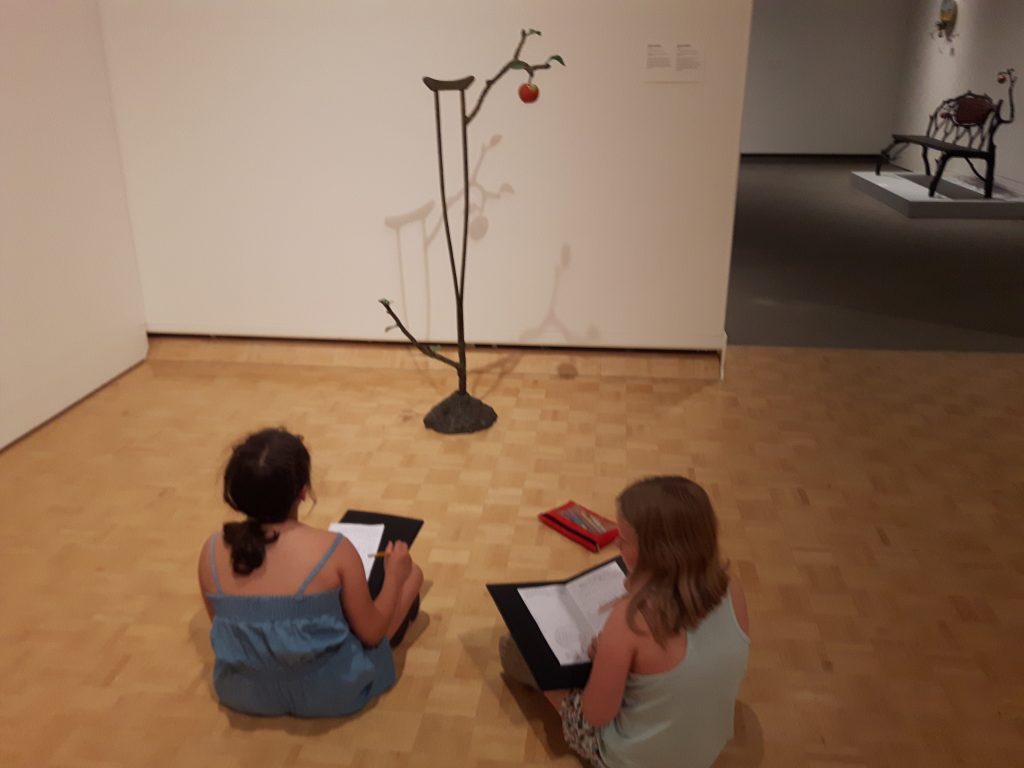


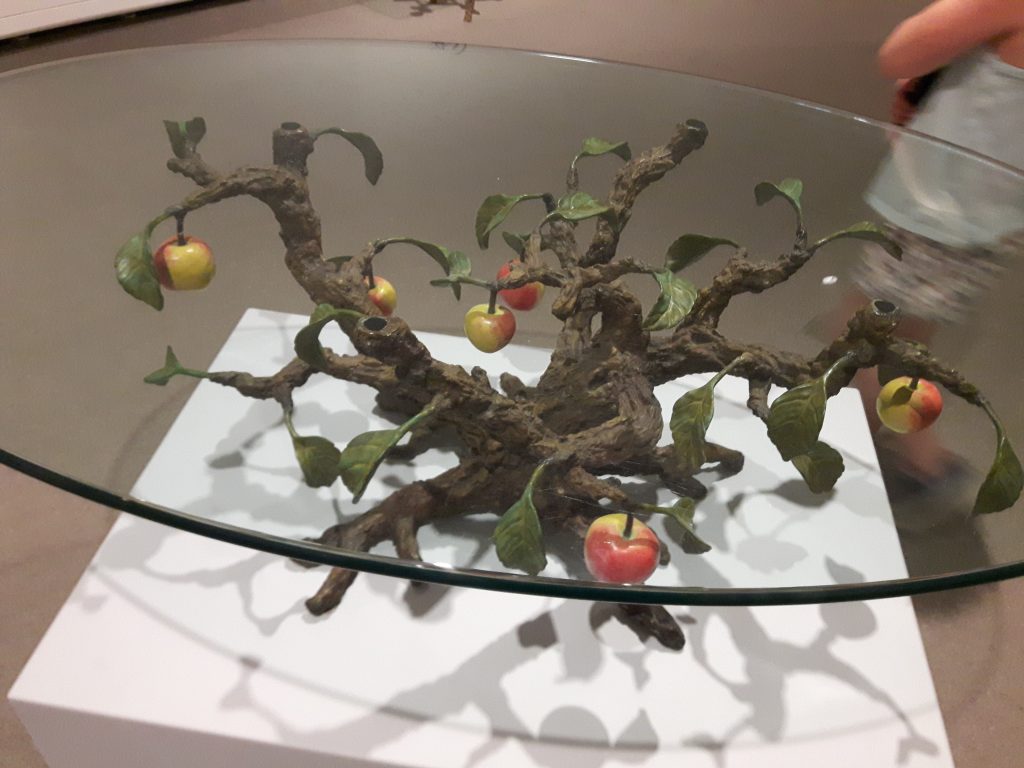
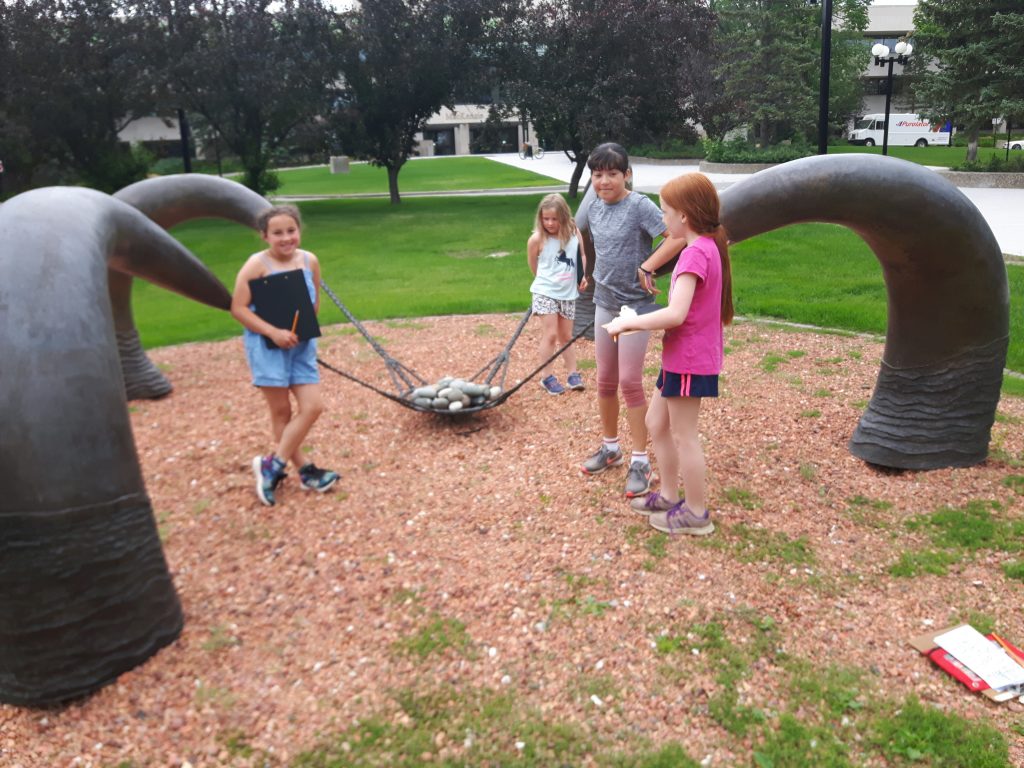


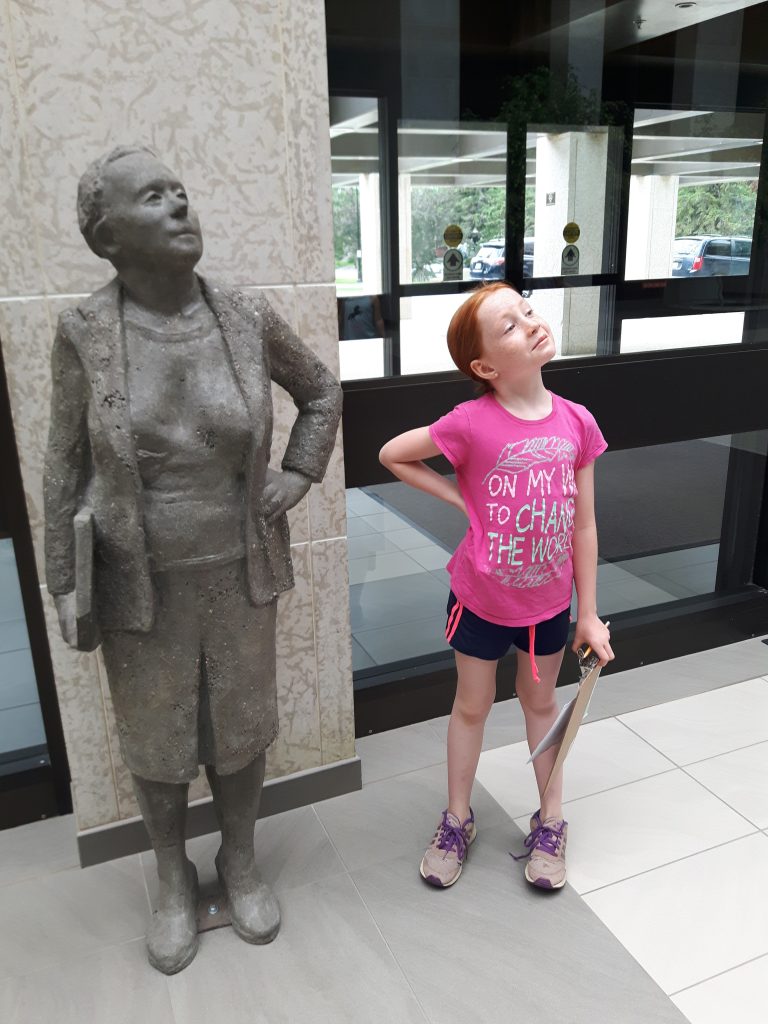

the great green bowl where we ran and played


Ice cream that matches
Ice cream that matches fingernails…exactly!!
Nap time…I obviously should have napped too because I took no photos of Rebecca and our wonderful tour of the outside of the museum and meeting of Scotty

 As summer begins, these girls reminded me how you don’t need very much to have fun if you have an active imagination. They never go straight from a to b without making it into a game or a play or something to laugh about. What a joy to spend a day with 4 girls, each one knowing they are absolutely loved, each one expecting something wonderful around the next corner, each one delighting in being with their three friends. They have amazing parents, and being with this group reminded of this poem, which appears on Facebook from time to time.
Make the Ordinary Come Alive
Do not ask your children
to strive for extraordinary lives.
Such striving may seem admirable,
but it is a way of foolishness.
Help them instead to find the wonder
and the marvel of an ordinary life.
Show them the joy of tasting
tomatoes, apples, and pears.
Show them how to cry
when pets and people die.
Show them the infinite pleasure
in the touch of a hand.
And make the ordinary come alive for them.
The extraordinary will take care of itself.
By William Martin, The Parent’s Tao Te Ching: Ancient Advice for Modern Parents.
The post Seeing Through a New Lense – Art in the City appeared first on Poached Egg Woman.
Photo Credit: Jo Anne Lauder
Jo Anne Lauder, one of the artists who took part in “Befriending Wildflowers – An Art Retreat” at the Qu’Appelle House of Prayer this July, took the stunning photo above, capturing the delicacy of a prairie wildflower bouquet. “Befriending Wildflowers” gave us a chance to slow down, to explore the hills and meadows around us, and to spend quiet happy time in each other’s company observing, sketching, and painting wildflowers. We painted under the green shade of trees on some very hot days, and were grateful for the cooling breeze. Grateful too, for the generous hospitality of Glenn, Chantelle, Kathy, Tim, and Simba, the cat. Their hospitality included delicious meals and surprise snacks, thoughtful reflections about wildflowers, and mowing the steep and curving trails that lead up the hills (a Herculean act, in my opinion). If Simba detected any sense of a rush, he had a lovely way of asking for some affection, and slowing us down. We were also deeply grateful for the many gifts of the wildflowers, and the beautiful natural world surrounding us. Below are some photos of our time together, and if you continue all the way to the bottom, some preliminary thoughts on how to make friends with a wildflower.
She said she doesn’t climb hills and then SHE DID! (Wait to go, Deb!)
this beautiful view (still celebrating the climb!)
new friends
we also came “to just be”, to quietly sit
Moments of quiet absorption


a little watercolour play
Breathe while you paint (this flopped but fun experiment because how will you breathe if you are worried about getting paint on the garage door??)
Loosening our brush stroke by pasting a stivk to the end of our brush (still worried about paint on the doors!!)

early Saturday morning, beautiful mist…that is the chapel in the distance
Spreading Dogbane Foliage by Deb
Getting to know the flowers by sketching them first (Deb)
Bouquet by Deb
Purple Prairie Clover and Gaillardia by Jo Anne
Unfinished Woodland Foliage by Jo Anne
Wild Rose by Jo Anne
Wildflower Sampler (Purple Prairie Clover, Western Wild Bergamot, Harebell, Prairie Coneflower, Gaillardia, Alfalfa) by Jo Anne
Wild Rose by Teri (First ever attempt with watercolours)
Wildflowers in Tree by Marg
Alcohol Ink by Marg
Bible Journal by Marg
Wildflowers and Earth by Marg
“Nature yourself with kindness” by Marg
A partial art gallery on the logs
Spreading Dogbane and other foliage by Sue
More foliage by Sue
Back: Teri, Jo Anne, Marg Front: Deb, Sue
Some Preliminary Thoughts on Making Friends with Wildflowers
Harebell Photo Credit: Chantelle Bonk, Qu’Appelle House of Prayer
The post How To Make Friends with a Wildflower appeared first on Poached Egg Woman.

Sticks and Stones (and maybe bones) was an all ages PLAYshop offered twice this summer. Both days, we began at Kerry Farm, and then drove to nearby Pheasant Creek Coulee where we spent a few hours exploring the meadows, hillsides, creek bed, and wooded areas around this part of the coulee. We then returned to Kerry Farm for lunch and an afternoon of rest and creativity (and one of the days, tree-climbing).
During the July PLAYshop, the wildflowers were blooming profusely, Saskatoon berries were plump and plentiful, the creek was running due to recent rains. A bone was found! On our August day, a few of the July wildflowers were still in bloom as well as the August beauties, there were still Saskatoon berries, and the creek bed was mostly dry and kind of green where there was moisture. The grasses were spectacular – every colour of green, as well as pink, yellow, rust, purple, and reddish. No bones were found, but a number of sticks and stones came back to Kerry Farm. My highlight during the second PLAYshop was this: a boy, running past me up the hill, declaring at top volume,”OH! I LOVE NATURE SO MUCH!” Makes me smile just to remember.
Below are some photos which will give you a feel for the beauty of Pheasant Creek Coulee, as well as the open hearted spirit each person brought to the day.
Photo Credit: Jody Hyndman
Photo Credit: Jody Hyndman



Photo Credit: Jody Hyndman
Photo Credit: Jody Hyndman


The post Sticks and Stones (and maybe bones) appeared first on Poached Egg Woman.

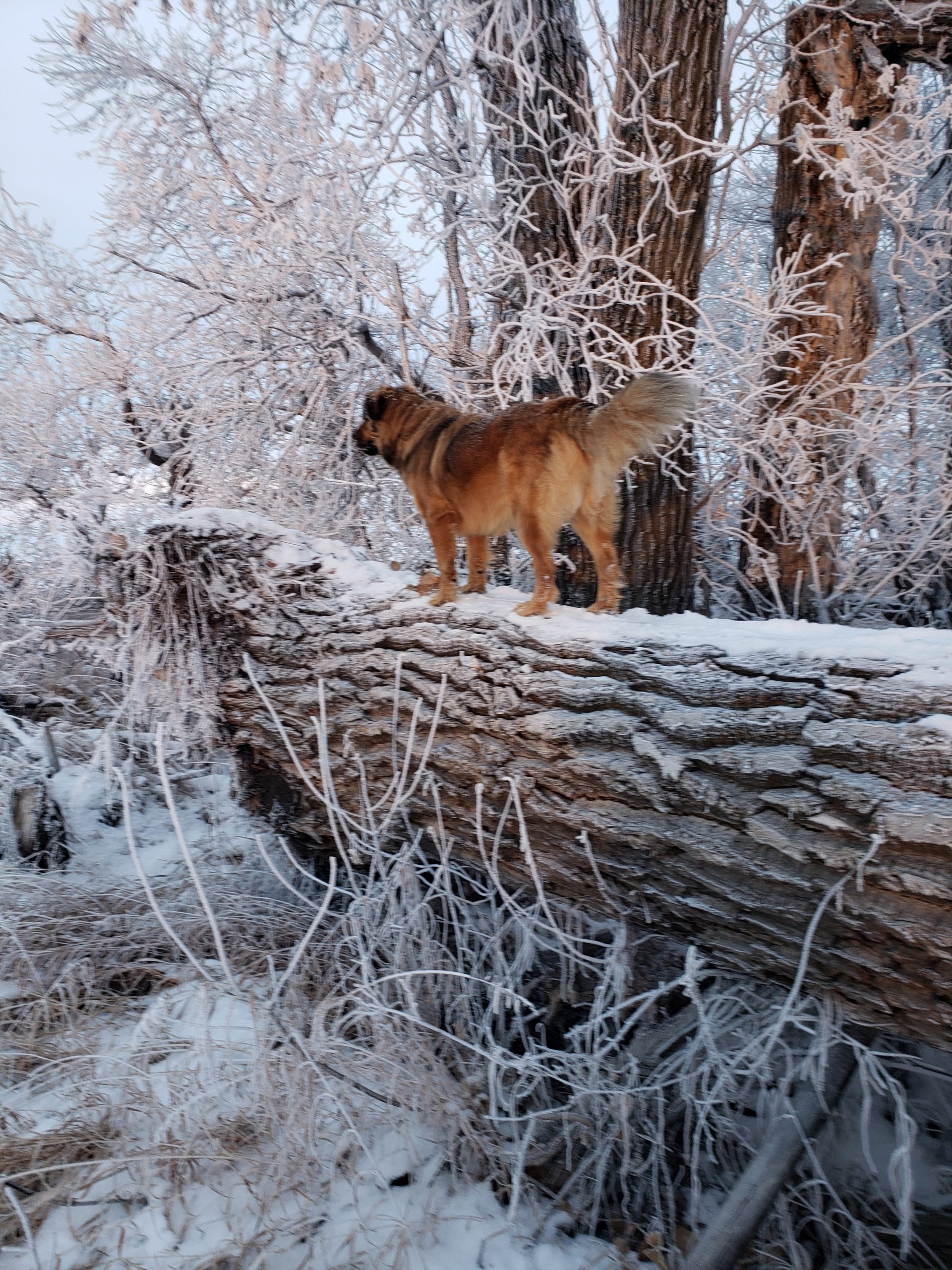
Sometimes, small changes in routine or the weather alert us to new beauty just around the corner or across the road. In my case, right across the road! Our aging and arthritic dogs are no longer content to sit and watch me skate on a winters morning, and I imagine that it is not very good for their sore old hips to sit outside on a cold day. So, before a skate, we go for a walk, and have discovered a treasure trove across the road. For years, we have called this area the “Mooney Trees” after the Mooney family who planted the shelterbelt and once had a farmstead here, but the area includes a small wetland as well as woods. For the dogs, there are so many wonderful smells, tracks to follow, holes to dig. A veritable feast for the nose!! This small area is alive with grouse, partridge, owl, mice, foxes, deer, and coyotes – to name only a few.
Last week, Southern Saskatchewan was bathed in hoar frost for several days running. As I explored the Mooney trees with the dogs, I was amazed at each turn, each new vista and view. The Smart phone photos do not do my morning’s walk justice, but will give you some idea of the beauty that is right here (but that I almost missed!)
I was reminded of my discovery of artist Emily Carr in my teen years. Reading a book about Emily Carr, I came across a few pages describing “the ache”. As I remember it, Emily Carr would often be silenced and stilled by beauty, her hand going to her heart. Sometimes tears would come. She was often overcome. Something she called “the ache” filled her, and oftentimes after experiencing the ache, she would paint or write. As a teenager, I read about Emily Carr’s “ache” with recognition and also with great relief knowing that somebody else felt this way at times when experiencing beauty.
The dogs’ excitement is expressed in wagging tails, alert ears, noses to the ground….moments where they forget about arthritis as they bound energetically through the snow. As for me, I feel achingly alive and alert, rapt in wonder.

The old balsam poplar, now fallen, who is teaching me to balance
Mia (not one of the arthritic older dogs) loving to balance!


The post WinterSoul #1 – “The Ache” appeared first on Poached Egg Woman.
“And guess what? Marina’s god mother has given her a star ice lantern mold. The perfect thing! How could she have known? We create our first ice lantern. It is magical. It is a pillar shaped star with a hollow inside it for a candle. We take our brand new ice lantern down to the rink. Once lit, the softest light shines from within the ice. And so begins the creation of ice lanterns. We are old hats at making coloured frozen blocks for snow forts using water and food colouring. Each day we make a new coloured lantern. Their soft light during twilight is magical. They are lit up like miniature igloos in a twilight world. We begin to skate less during the day and more in early morning and around sunset and after.” from my Journal of an Ice Rink, 2007
Looking back at this journal entry from 12 years ago, I am reminded how difficult (nay, impossible) it is to keep them lit if there is any breeze at all. A day without wind in Saskatchewan is a rare gift. I wonder if the winter of 2007-8 was a relatively calm one? In the years since, I have a list of people who I text if it is going to be an “ice lantern evening” (in other words, there is no wind), because I don’t really know for sure until the sun starts to set. Sometimes 2 people come, and on one memorable occasion 20 or 30 came. Amazingly, no one got hurt , many of us skating in wonder as the lanterns lit the ice. I was in total amazement at the hockey players amongst us, mostly young, who were zipping around like hummingbirds on steroids, having a ball!!
The next entries are from the same journal that starts this blog post. And while the sun rises I describe were often pale salmons and pinks and golds, the limitations of my phone camera are such that it can’t catch the exact light when the lanterns are lit. Perhaps between the writing and the photos, you can get a bit of the feeling of how it is to skate during these magic hours.


My favourite skates have been around dawn and dusk. In the morning, when the sky is still dark and gradually lightens, the sunrise quite visible from the dugout, reflecting off the steel barn, fingers of light touching the rink. The wonder of skating at this time is that the morning beauty remains planted in my soul for the whole day.
This morning – ALMOST no wind, some stars still out, a luminous half moon, bright shadows, hoar frost. I light the star lanterns. They are so lovely and simple (water, food colouring, a candle). They add to but do not blind the nightlight. Dark prevails or a sort of twilight dark. How I love it! A simple peace fills me, a quiet joy. I feel right with the world. After awhile, I sit quietly, just breathing, in out, joining heart and head, puffs of breath joining the morning air. The gift of being right here, right now fills me. I feel love all around. I skate again, feeling so connected to the ice, the bleached dry grass in snow, the snow drifts, the sky, feeling my body move, my soul expand, my spirit flying across the ice. A holy place, a holy time. Indeed.
In memory the ice rink has become a string of dawns and dusks, a necklace really, each soft dawn and dusk like an opal. Around sunrise, this is the hymn that comes to mind.
Bright morning stars are a’rising
Bright morning stars are a’rising
Bright morning stars are a’rising
Day is a breaking in my soul (Traditional/Appalachian)
Journal of an Ice Rink, 2007


Ice lantern molds can be ordered from Lee Valley Tools.
The post WinterSoul#2 – Ice Lanterns appeared first on Poached Egg Woman.
My memories of building snow forts as a child have to do with enormous piles of snow. Were my childhood winters snowier than my adult winters? It would seem so. Even so, I remember a snow-filled Saskatchewan winter (1998?) when my young children and I were completely absorbed building a snow fort on the 5 meter high snow mountain created by our makeshift snow plow. This fort had stairs and rooms, stained glass windows (frozen blocks of ice with food colouring), thrones, tables, and a flag. The fort consumed our energy for days on end. A few years later, my kids were too old to have their mum build snow forts with them, but I remember the happy times they had with friends creating caves and tunnels in big snow drifts around the farm.
Since having an ice rink, I have returned to building with snow, usually in later winter when snow drifts form, and can be sliced just so with a shovel . At a recent winter PLAYshop (A WInter’s Day at Kerry Farm), my inspiring friend, Barbara Mader, built a small igloo like structure – too small for a person or a big dog, and with no door to get in. It is meant to be lit inside and you can see the beautiful results in the photos. I am always inspired by Barbara’s love of playing with snow – creating unlikely and narrow winding paths, walls for no (apparent) reason, or beautiful designs.
While Barbara was shovelling, I was hollowing out a part of a curved snow drift thinking it would be an inviting spot to crawl into when the world (the news!) got to be a little too much. A few days later, along came my art buddy Emora who loved my little cave, but really thought it should be a tunnel. Ten days later it became a wonderful curved tunnel with different views from either end.
I loved digging inside that tunnel. It was quieter than quiet in there. It was warm. It smelled like snow. The wind howled outside but all was still within. Carving away at the sides and roof of the tunnel reveals different kinds and qualities of snow – sedimentary bands of tightly packed crystals, icy pockets, maple syrup season snow (big hard granules), and snow soft as soft can be. A white, bluey, purple, gray cave. It was like crawling right into the heart of winter and resting a while. Part of me wishes I had left it a cave, but there is something compelling about finally breaking through to that light at the end of the tunnel! For my efforts, I received great joy and delight as well as the sorest abdominal muscles I have ever had – digging and carving while on your stomach or back is more of a workout than I would have guessed.
If the forecast is right, tomorrow I welcome more snow, which we desperately need in drought stricken Eastern Saskatchewan. I also welcome snow because when the North wind blows (as it surely will), more drifts will be created, and curved blocks of snow are cut easily from drifts where they make their own lovely shape. It is so fun to slide your shovel into a drift and see which way a crack forms and what shape your next piece of snow will be.
Barbara Mader, with her slick shovel, creating a secret path, 2020
Barbara Mader’s beautiful snow structure lit from within by “Larry’s Lantern”
From afar
Close up
Outside view of tunnel, Kerry Farm Ice Rink 2020
Feet first
The other side
Curved blocks of snow cut from drifts

Ice Lantern and snow design by Barbara Mader
Mystery creature
from 2013 when the drifts were THIS high


The post Winter Soul#3 – Building with Snow appeared first on Poached Egg Woman.
When I first moved to Kerry Farm, I was invited to tupperware and candle parties. I always felt I should buy something (even if I didn’t need anything) and people would say, “Oh no, you can just come – you don’t need buy anything”, but my inner voice thought I did. Eventually, I started saying no to such invitations. I wasn’t too sad when I stopped being invited.
 A pleasure of my art business is delivering pieces of art or cards to people, especially when it involves a visit. Amongst my favourite visits are those I enjoy with Margaret Heil, who just celebrated her 100th birthday with family and friends. Margaret invites me 3 or so times a year to bring my basket of cards to her sunny living room. She selects her favourite cards – she looks at every single card in my basket and assembles a “long list”, sorts through again for the “shorter list” which are the cards she will buy. Her very favourite card is “the Tree of Love”. We enjoy a wonderful visit. As Margaret likes to say, we go way back….something like this – her daughter babysat my husband and his twin sister when he was not yet walking, the same daughter taught all 4 of our daughters, her other daughter did books for Shane at one time, a grandson worked here one summer, our eldest daughter babysat her great grandchildren (two of whom were also twins). One of my favourite exploring spots in the coulee is owned by her grandson and daughter in law. And, so on!!
Margaret in her home, selecting cards


Recently a city friend invited to come by with cards as she and one of her friends wanted to purchase some. Those of us who live in the country well know the kind of stacked lists we get when we visit the city! On this particular day, everything went awry when my car, which I had taken in for something small, needed to stay at the shop for a few days for some fix that was not so small. No loaners were available, but I could get a rental car – and before you know it, I was behind on my list and somewhat harried. When I arrived my friend’s apartment, she had invited a few other friends, and had set her coffee table with tea, fruit, delicious dates and dainties. A party! Such a lovely surprise and welcome. The cards led into all kinds of discussions – growing up in rural Saskatchewan, chickens, where does the name Poached Egg Woman come from, and so on. One of the women (after my own heart) pulled loose change out her pocket and said, “I only have $5.50 – what will that get me?” I wanted to say, “You don’t have to buy anything” but of course, she felt like she did! Needless to say, I had a wonderful time and made some new friends. Not a tupperware party, but kind of like one. I have come full circle!!
The post Not A Tupperware Party appeared first on Poached Egg Woman.
I notice that I love this slowed down world, even as I sometimes feel grief and worry, or even guilt for appreciating the leisurely pace of life.
I notice that I am breathing more slowly.
I notice that after a week of steady Covid 19 news, I had to shut off the radio and social media for a few days to let my head and heart clear, to give myself time to really take this in. I felt too full – of information, of statistics, of black humour, jokes and diversions, of helpful philosophical takes.
I notice in a new way how deeply grateful I am to live where I live, to have discovered the richness of a small piece of land across the road made up of shelterbelt and wetlands, marsh grasses and willow, ruffed grouse, rabbit, fox, coyote, deer and more. My “noticing walks” take more time because I don’t have to rush off anywhere.
I notice new tracks each day. 


I notice my joy in the easy companionship with our two old dogs, Lady Lucy and Hercules, who are the reason I walk here. Noses to the ground, ears alert, tails awagging, their body language reminds me that I am missing so much.
I notice the male ruffed grouse who has lived here all winter, successfully avoiding the fox, and who is drumming for his mate. I haven’t seen her yet! I notice the pairs of hungarian partridge who I disturb as they sit together near where I walk. I notice the magpies, the ravens, the spring call of the chickadees.
I notice the marsh grass and the brome grass and how the posture and bearing of each is unique. I spend longer than usual looking at dried weeds and I take some home to paint. I become completely captivated by their forms and paint dead plants and their seed heads for several days.


I have always wanted to paint plants at this time of the year, but I have never taken the time to do so before this quarantine. I like to befriend wildflowers and plants – getting to know them better in all seasons and stages is an investment in this rich friendship.
Each day I notice things that I have given a fleeting glance to before, but which I have never before given my full attention.
It’s a little like my gradual understanding of Covid 19 and being quarantined. The other night I dreamed that I was at social gatherings and no one was social distancing. I didn’t have the right language to tell them they must. In this way, Covid 19 has entered my dreams and my sub-conscious world. But in so many other ways, it feels surreal.
Each day, I learn about how the threat of Covid 19 is affecting others – the homeless, those in prison, those seeking shelter from abuse. The cracks in our society are more evident – people being paid minimum wage, losing work with nowhere to fall. The moms who are working at home, and homeschooling, and holding it all together – or not. How this might feel for those in poor or compromised health. Businesses on the brink of shutting down. The grocery store and pharmacy workers, some elderly, going to work day in and day out. The cleaners and laundry workers, care workers, nurses, lab technicians, nurses and doctors who are keeping our hospitals and long term care facilities open and safe. Just yesterday, I read about a woman with breast cancer whose scheduled mastectomy has been cancelled, and who cannot learn how her breast cancer is progressing. I hear these stories as if through a layer of fuzzy wool, distantly. Somehow, these realities are not fully penetrating my being.
My sitting chair in the marsh. Wonderful place for long phone calls or just to sit
Noticing the weave and colours of this chair
I suspect that this will change with time. It will most certainly change when I or someone I know contracts Covid 19, or is affected in some direct way by this pandemic. We learn by degrees. Our minds are absorbing so much. It takes a long while for our bodies to catch up, to fully take in all that this pandemic means. In the meantime, I will accept the gift of time to truly notice the beautiful world just past my door. To be truly here.
It seems fitting to close with this beautiful poem by Rosemerry Wahtola Trommer called “Here”.
Even as the snow was falling,
the birds in the branches
kept singing into morning,
easing their bright notes
into the thin gray spaces
between snowflakes.
There are days, imagine,
when the birds go unheard.
And it isn’t for lack of song—
the single note chirp
of sparrow, the bass of raven,
the chickadee’s hey swee-tee.
Some gifts come only
when we stay in one place,
come only when we are alone,
come only when we stop praying
to be somewhere else and instead
pray to be here.
Y0u can receive a poem a day from the wonderful Rosemerry Wahtola Trommer. Go to her website and subscribe at the bottom.


The post What I Notice appeared first on Poached Egg Woman.
Willows in fall
After the leaves are gone from the trees in the fall, and before they make their miraculous appearance in the spring, I only have eyes for willow!! Not quite true, but it is during late fall, through winter, and into early spring when the willows – the small reddish bushes by sloughs, water of any kind or in ditches – claim my heart. Especially in the season of spring, when the colours of their branches seem to change daily, when they start to look like burning bushes along the road. One willow bush can have branches that are gold, yellow, olive green, copper, rust, red, burgundy, purple/black, grey, brown and a myriad of shades in between.
Catkins are edible, high in vitamin C, and can be eaten on their own, fried with other food or added to soup.
This spring, the spring of the pandemic, we will all remember. Amongst the gifts of this time for me has been more time outdoors to truly take time to notice. Just across the road from our farm are two small sloughs, both surrounded by willow, aspen, and red osier dogwood. Each day, I have visited the willows, noticing not only 4 varieties of catkins, but especially the vivid and ever-changing colours of their bark. How a very old gnarled willow, which is mostly grey, can have young shoots of every colour. How some branches are greeny gold at their base, moving into an almost orange, and as we get towards the top they turn red or burgundy.
Taking time to notice meant that I could bring willow boughs into the house to paint as it has been wintry and cool outside. I spent a week painting “Willow Meditation#1”. You will see some red osier dogwood here as well because I simply couldn’t resist it! Painting is a way of becoming acquainted with my plant relatives, and teaches me to notice, to take a second or third look. Painting humbles me – the colours look different once I bring the branches inside, and they are very hard to replicate. I never quite do, but I certainly have fun trying!
Willow Meditation #1 (1st week of April), 11″ x 18″, watercolour
As i was painting Willow Meditation #1, I began to notice more and more yellow and orange branches, so I began a second willow meditation. Sometimes I ran outside with a branch, looked at it with the sun on it, and ran inside to see if I could I could come a little closer to the vibrancy.
“Willow Meditation #2″ (2nd week of April), 11″ x 18”, watercolour
on the left, watercolour sketches, on the right an acrylic effort and at the top, the inner bark of willow
This spring, I have been inspired to paint the willow branches close up. Other years, I have tried to catch a bit of their spirit from far away.
Not all willow trees have pussy willows. An individual tree will produce either male (pollen-producing) or female (seed-producing) flowers, so cross-pollination and fertilization is necessary.
A compound called salicin is found in the inner bark of willow trees – this compound is used as pain relief in aspirin, and many other herbal medicines.
What will I do with my bouquets of willow branches? I will enjoy them a bit longer and then can cut them up and put them in jars of water. After a few days, remove the willow stalks and you have root hormone which will help you with spring transplanting! New transplants also love to be watered with this willow water. Or perhaps I could plant them and create a “living willow hedge”? I could scrape out the inner bark, add it juniper berries collected on the hillsides, and put in my bath with epsom salts – this combination is said to soothe aching muscles.
Willow is flexible and has long been used to make baskets, and more recently furniture, fences and art. The photos below show outside art made with willows in Dawson City, Yukon.


 Thanks to Beverly Gray, The Boreal Herbal: Wild Food and Medicine Plants of the North, Aroma Borealis Press, 2011, pages 269-273
The post The Magic of Willows appeared first on Poached Egg Woman.
I have been intrigued by how many quotes I have been coming across which connect Covid-19 to lungs, and trees to lungs, and lungs to grief, and trees to staying put. My love of trees has been life long. In recent years, I have enjoyed more intentional time with and among trees. This shift stems from the tremendous loss of so many wetlands and small bluffs of aspen on the prairies in recent years as farmers make way for more crop land. Some of those small bluffs of trees have very dear to me. I may not be able to change the decimation of wild areas on the prairies, but I can become a better friend to the trees I do encounter each day. For these reasons, I pay special attention to anything I read concerning trees.
My personal connection to lungs (besides the fact that I use them every moment, every breath I take), is that my mum died of lung cancer at age 65. Before she died, her greatest fear was losing her breath or choking to death, but fortunately her last breath was a peaceful one. She was a sensual woman, taking enormous pleasure in the scent of salt air when we approached the ocean after a long time away. She found the spring smell of thawing horse manure just as beautiful. Which has me thinking of her daily, as our horse pasture begins to thaw!! In either case, she breathed in deeply and rejoiced!
 So, we begin with lungs. I appreciate the writing of Kate Woods, a doula from the UK active both in doula training and Doulas without Borders. She has recently survived Covid-19, and was especially vulnerable due to scarred lungs from a childhood illness with pneumonia. She recorded “Virus Musings” day by day on her Facebook page. Kate’s description of how the virus felt helped bring this home to me: “This virus is all about the lungs. I can feel the pressure, like a baby elephant sitting on my chest. Breathing itself seems to be on the ’to do’ list and the lungs don’t seem to be that fussed about organically filling. It is an effort. Whole sentences are off the table now, as the air is needed for more basic things. I communicate with hand raises, nods and few words. I can now feel the glue-like substance at the bottom of my lungs. So this is what she’s made of. Hello Ms.Corona: she’s a sticky, thick, unmoving mass which fills pockets up in the lungs that should have air in.”
Take a breath.
Kate Wood continues, “The deeper medicine which I feel arising through this personal and global experience, seems to be about grief. The lungs have long been associated with grief and Ms.Corona invites, no, demands, us to sit very still indeed (even walking across the room is like scaling a mountain) and try to breathe through the ‘pollution’ deep in the lungs.”
“The Solace of Trees”, 15″ x 15″,ink and watercolour
I take a breath before I type. Breathe in, breathe out.
It has taken me a while to recognize and acknowledge my own grief about Covid-19, all those affected, and the implications of being in isolation. My own situation, after all, is hardly grievous, especially when compared to that of so many others. (I know – it is never wise to compare.) Sometimes my grief feels like being overwhelmed – I cannot listen to one more news report, I come home from a rare outing feeling exhausted, I can talk to maybe one or two people outside my home each day. Grief slows me down. Sometimes my grief is expressed as confusion, uncertainty, awkwardness, frustration, unknowing. Sometimes it shows up when I watch something lighthearted and maybe a little cheesy on Netflix! Other times my grief is expressed in tears – when John Prine died, I was able to cry. Hearing stories about elders dying alone has also opened the floodgates. It seemed like John Prine and stories about elders were acceptable portals that gave me permission to cry.. To just sit with whatever way I am feeling.
Then I read this beautiful poem by Rosemerry Wahtola Trommer, an amazing American poet, who sends a new poem to my inbox each day.
Respiratory
This morning, after the blizzard,
after the sun came out,
there was a moment when the shadows
of the empty cottonwood trees
patterned the snow like tree-sized lungs—
the trunk was a bronchus,
and the branches, bronchioles
that split into twiggish alveoli.
And the tree seemed to say, Remember.
I often neglect to be grateful
for lungs, for breath—
such a simple, forgettable gift.
But in the dividing silhouette,
I saw into myself, a divine branching,
an inner tree, an invitation
to sit and breathe. Remember, it seemed
to say, and I followed the lines until
they disappeared into the light.
I am grateful for the gift of breath, and for Rosemerry Wahtola Trommer’s gift of reminding me so eloquently.
Nicolette Sowder, founder of Wilder Child (nature based learning), makes the connection between staying at home – our present “groundedness” – and trees, who are grounded all the time. We now know that trees can communicate sending nourishment, messages and support to other trees. We are like trees at the moment, communicating over distance, sharing love in new ways from the root of our beings. This is so true. Who do I turn to when in need of solace? Often, I turn to trees.
Kate Wood writes, “Ironically now and only now, the lungs of the world are beginning to fill, as the skies and the roads, the rivers and the seas clear of our rushing about. Somehow, the tables have entirely turned. The earth takes a nice deep breath and we’re now flapping about, gasping and flailing, like fish on the shore.”
Vera Satzman, Cry of the Lake Dwellers #7 (http://www.verasaltzman.com/)
And finally, I came across this beautiful poem written by Nadine Anne Hura, a writer of Ngāti Hine and Ngāpuhi whakapapa based in Porirua (North Island of New Zealand). This poem has been shared widely by Jacinda Ardern, Prime Minister of New Zealand.
 Rest now, e Papatūānuku
Breathe easy and settle
Right here where you are
We’ll not move upon you
For awhile
We’ll stop, we’ll cease
We’ll slow down and stay home
Draw each other close and be kind
Kinder than we’ve ever been.
I wish we could say we were doing it for you
as much as ourselves
But hei aha
We’re doing it anyway
It’s right. It’s time.
Time to return
Time to remember
Time to listen and forgive
Time to withhold judgment
Time to cry
Time to think
About others
Remove our shoes
Press hands to soil
Sift grains between fingers
Gentle palms
Time to plant
Time to wait
Time to notice
To whom we belong
For now it’s just you
And the wind
And the forests and the oceans and the sky full of rain
Finally, it’s raining!
Ka turuturu te wai kamo o Rangi ki runga i a koe
Embrace it
This sacrifice of solitude we have carved out for you
He iti noaiho – a small offering
People always said it wasn’t possible
To ground flights and stay home and stop our habits of consumption
But it was
It always was.
We were just afraid of how much it was going to hurt
– and it IS hurting and it will hurt and continue to hurt
But not as much as you have been hurt.
So be still now
Wrap your hills around our absence
Loosen the concrete belt cinched tight at your waist
Rest.
Breathe.
Recover.
Heal –
With thanks to these women – Sylvia (Frith) Bland (my mum), Kate Wood, Rosemerry Wahtola Trommer, Nicolette Sowder, Nadine Anne Hura, Jacinda Ardern and Vera Saltzman.
“In the Hawthornes”, watercolour.
The post Lungs, Trees, Grief, and Staying Put appeared first on Poached Egg Woman.
Let me count the ways!
If there has been a personal theme this Covid spring, I would call it “seeing but not seeing”. This sounds mysterious, but I often see things, and yet don’t really take them in. Catkins are a great example. Most years, I love to find the first catkins, bring some in to enjoy, marvel at their softness. Sometime later, I may notice how the willow trees look lacy at a distance, and how pretty that looks. But really, before this I have considered the appearance of the pussy willows to be the main event.
With more time to explore this spring, I have visited the pussywillows and catkins just about every day, noticing not only their great variety, but how also lovely (and sometimes unlovely) they are at each stage of development and in every weather. I have photographed them with my phone, and have observed that the pussywillows most amazing to me I can’t photograph at all – these are the tiniest ones. On a rainy morning, they remind me of twinkle lights, small jewels bedecking the curves of the willows, hundreds of them. There are no pictures of them here!
This may be one of those posts I put together mostly for myself. Now that I have taken time with the pussywillows and catkins, I don’t think I will pass them by again. Even so, behold the variety of expressions of the catkin!!
Just before they fall off, and the leaves begin to come
Female catkin, all others showing these photos are male
Pussy willows are dioecious, meaning there are both male plants and female plants. The pussy willows act as insulators, for the flowers (catkins) that will eventually bloom. I am glad to know this because I saw my first pussy willows in January, during a thaw.
Usually the male catkins grow first and release their pollen. Then the female catkins grow and open shortly afterwards to receive pollen. By releasing and preparing to receive pollen at different times the tree has less chance of receiving its own pollen and a greater chance of receiving pollen from other trees. The pollen from other trees can produce stronger offspring. Willows do not spread their pollen via the wind. Instead, they rely on insects for pollination, despite having less than gaudy flowers. What they lack in visual cues, they clearly make up for in olfactory ones, producing large amounts of strongly scented nectar. Bees and flies are readily drawn to pussy willows in full bloom. One of the advantages of flowering early in spring is that there is very little competition for pollinators. The willows gain the full attention of the many bees and flies that also awaken early in the spring and are desperate for food.
Source: Johnny Caryopsis, The Biology of Pussy Willows, Nature North
The post Catkins! How do I Love You? appeared first on Poached Egg Woman.
My friend and teacher Ron tells me that when we thank Mother Earth she knows! Doesn’t matter how we thank the earth, he says. You can bow, sing a song, strike a yoga pose, simply notice and pay attention, dance a jig, say a prayer, write a poem, offer a gift. However we do it, Mother Earth knows. According to Ron, she celebrates. She wants to be noticed, to be loved, to be acknowledged, to be remembered, to be revered.
I don’t know that I have ever before taken the time to visit Pheasant Creek Coulee almost every day. It has been a gift in noticing, paying attention, being astonished, and returning home. My eye most often scans the earth, looking at stones, grasses, emerging plants, blossoming plants, and faded remnants of last year’s growth. Once again, this post is mostly for myself – a visual record of the plants that typically grown in Pheasant Creek during the first half of May. These wildflowers are both common, and uncommonly beautiful! Each year, it seems, i meet a new plant friend I managed to miss in all the springs before!! (This spring it is Sunloving Sedge.)
Early cinquefoil- with beautiful silver lining on the leaves, early cinquefoil comes up after the crocuses about the same time as moss phlox.
Moss phlox
Violet
Cushion milk vetch
This second week of May, cushion milk vetch dots the high sandy slopes
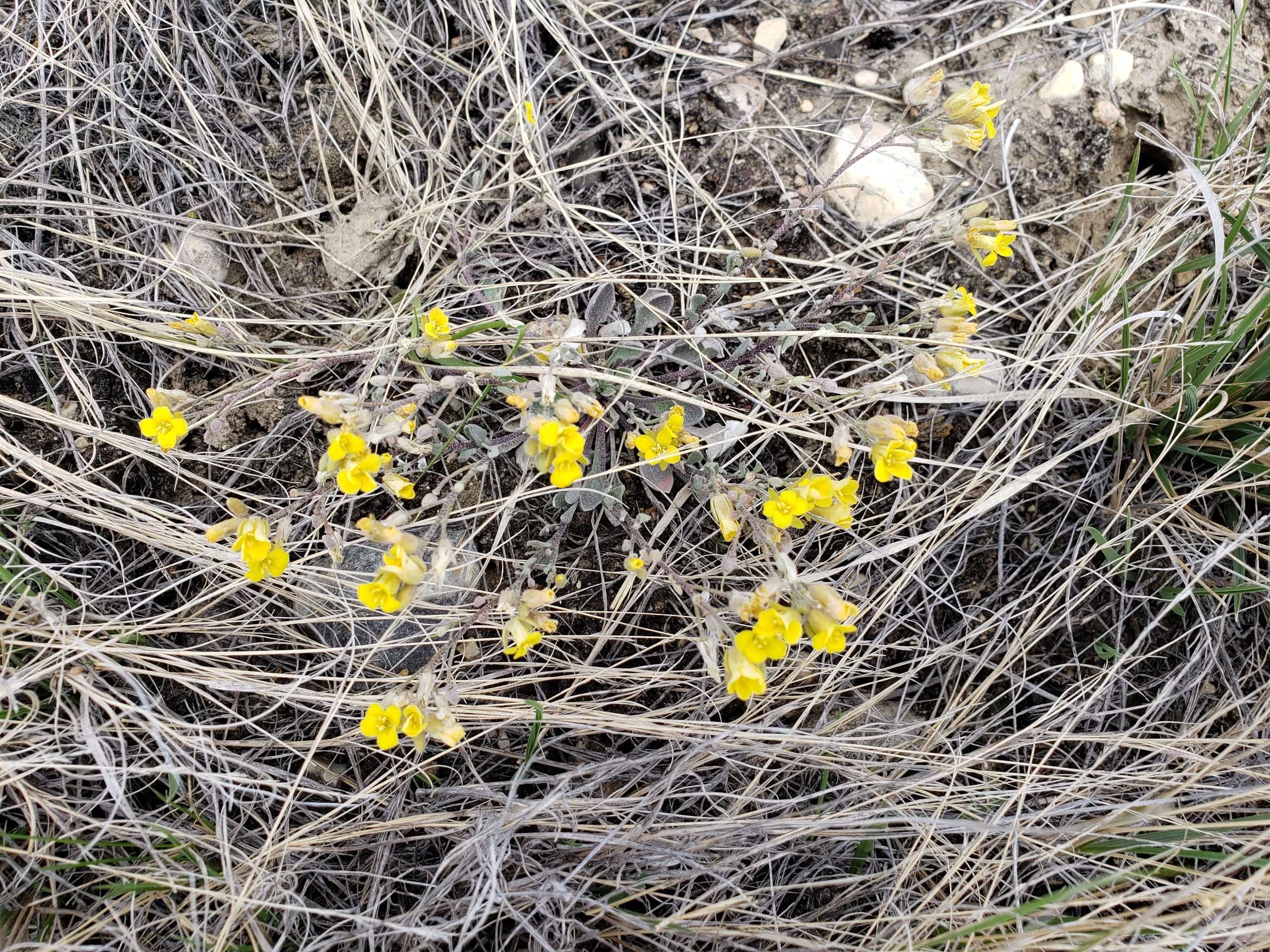
Sand Bladderpod
Sand Bladderpod
Lower towsnendia (usually seen in groups. Is this early?)
a last crocus on a woody hillside (May 8, 2020)
Wild strawberry
Sunloving Sedge
Sunloving sedge
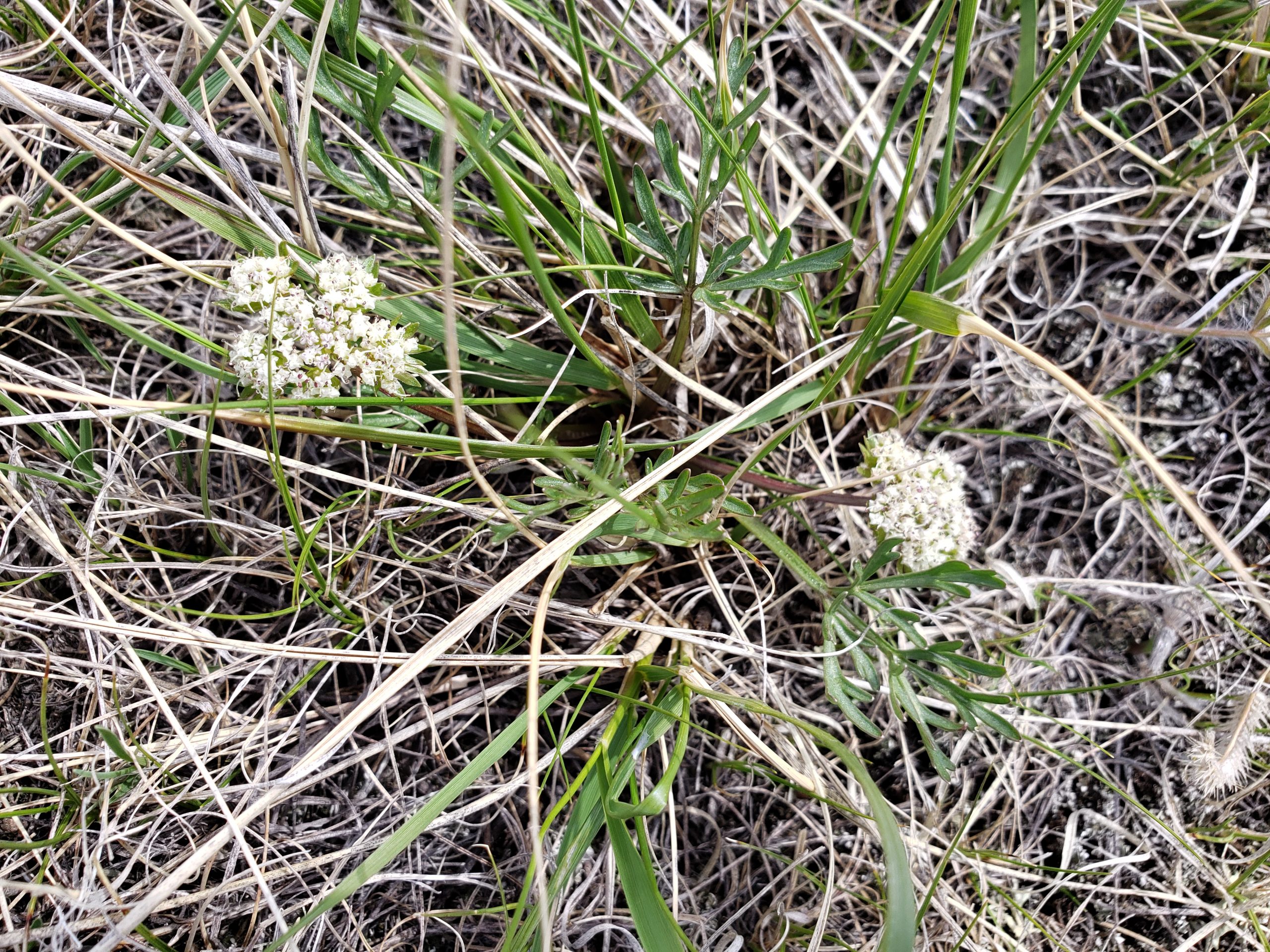
Plains Cymopterus (not a great photo. Less than an inch high. Part of the parsley family which you can see in its leaves)
Early Locoweed
Missouri Milk Vetch
Missouri Milk vetch
Showy Locoweed (the flowers not out yet, but some an impressive plant, so furry and luxurious!) Its related to Early Locoweed and flowers will be a beautiful blue/pink/purple
Golden Bean
Three flowered avens (May 13, 2020)
Pale comandra (very common, flowers not quite out)
Low Everlasting
Low Everlasting
Chokecherries leafing out (I could not resist this colour!!)
Hoary Puccoon – just about to pop! (May 16, 2020)
Sources: Wildflowers Across the Prairies, by F.R. Vance, J.R. Jowsey and J.. MacLean, Western Producer Prairie Books, Saskatoon, 1984 and Glenn Lee’s excellent website.
The post Pheasant Creek – Early May Flowers appeared first on Poached Egg Woman.
Some of the flowers shared in an earlier blog (Pheasant Creek- Early May flowers) are also shown here because they really come into their own in late May. Many of the early May flowers are earth huggers. In late May, some plants grow a little taller. Late May is also the time when Saskatoons, chokecherries, hawthornes burst into blossom and new leaves emerge. I have included some photos of both here. The new plant for me this time is right below. As I write this, my favourite coulee smell – the unforgettable scent of wolfwillow in bloom is everywhere!
(Thanks to Debra for the help!)
Purple Rock Cress, I think. Not sure (see below) Easy to miss. I had been wondering what the tall quick growing stems would turn out to be, which is how I noticed it when it bloomed.
On the right is an enlargement of what I think is purple rockcress. Another rockcress, called reflexed rockcress has seedpods which point down as with the two plants in the centre. I will update this as I learn more.
Although early locoweed is out by the end of April, it was in its full glory the third week of May.
Look carefully and you can see clumps of creamy yellow early locoweed dotting this hillside
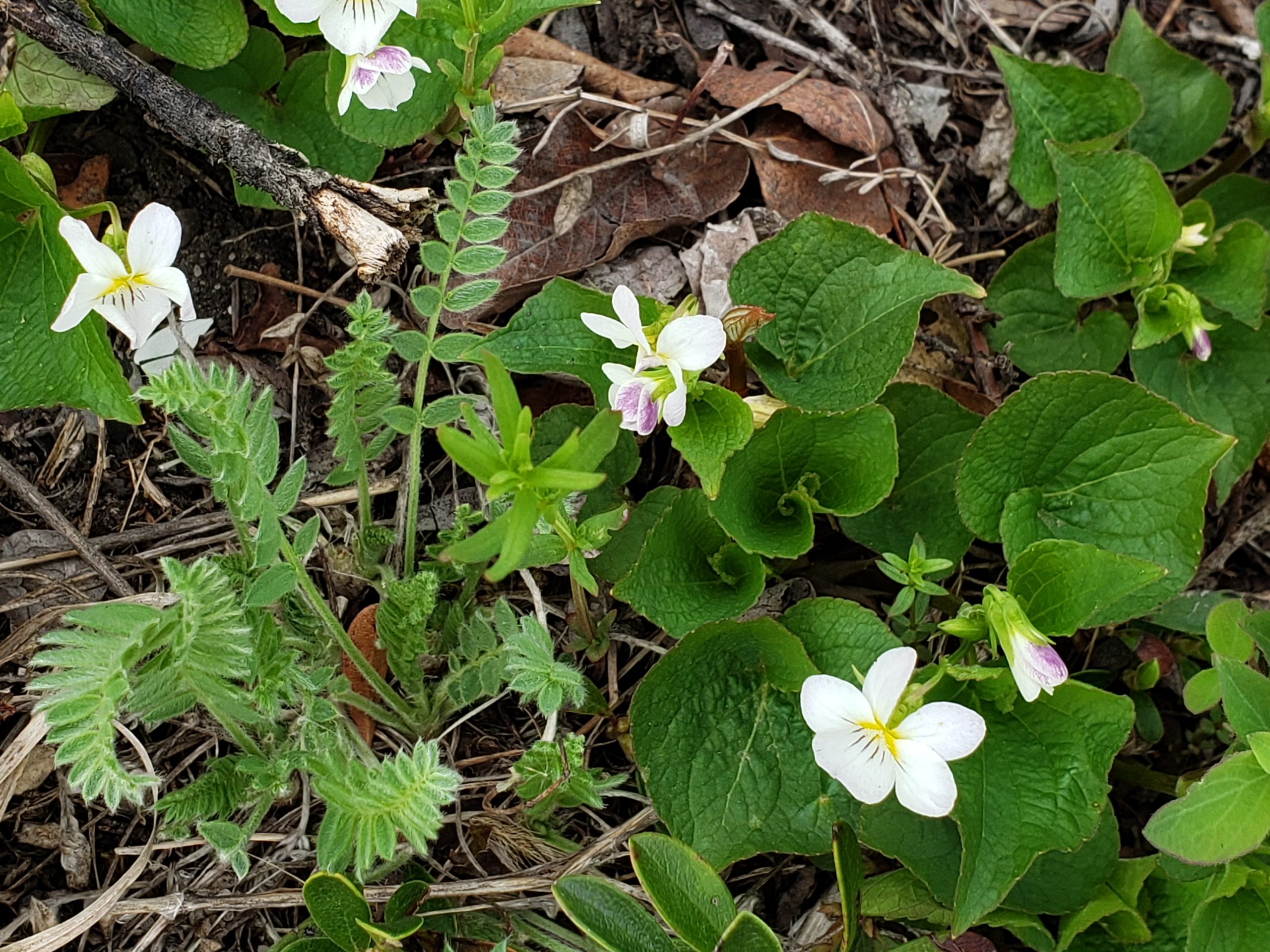
Western Canada Violet
Hoary Puccoon
Narrow leaf puccoon. Seems to like the lower slopes of the hills. Cousin of hoary puccoon.
Clustered Oreocarya. I am especially partial to soft and furry leaves like these.
Fairy Candelabra is the name I love (Androsace Septentrionalis)
I see lots of Mouse Ear Chickweed in the coulee. (Cervastium Arvense)
Flax, not looking so blue in this photo
Heart Leafed Alexanders
Pale Comandra with the flowers open. Very common but for much of May the flowers were closed.
Lanceleaf Paintbrush
Silvery Groundsel. I realy like her crooked stem and how the petals come out sort of here and there.
Seneca Root close up…there is a little purple in these which we don’t see here
Clump of Seneca Root…easy to miss
Three Flowered Avens
Wild licorice emerging. I did see some in bloom but did not get a good photo.
on the left Indian Breadroot (also called Wild Turnip) beside some sage. Indian Breadroot is a favourite of mine.
young aspen…love these colours
Saskatoons in bloom
Hawthorne blossoms just ready to pop
Spanking new birch leaves
Chokecherry blossoms

For me, the smell of wolf willow in bloom is absolutely prairie!

The post Pheasant Creek – Late May Flowers appeared first on Poached Egg Woman.
Despite the dry hills, it has been hard to keep up with all the new blooms and emerging plants this first two weeks of June. The air has been permeated with the distinctive smell of wolf willow in bloom – a prairie smell unlike any other. For most of this time, all the plants shown in my late May post (with the exception of the fruit bushes) have continued to be in bloom as well. Even though 22 plants are pictured here, there are also plants I have seen which are not included here (cut leaf anenome, wood anenome, some milk vetches among them) and plants that I have missed altogether. Keeping this record is helpful to me. I notice more.
The first tiny gaillardia…almost like a dream of gaillardia!
Goat’s Beard
Wolf Willow – this beautiful scent filled the air the first week of June. Nothing like it!!
Indian Breadroot, also known as wild turnip
Indian Breadroot (This is a favourite plant of mine)
White Beard’s Tongue. Usually I have also found Blue Beard’s Tongue but not this year.
Love the colours in this young Saskatoon
Wild Rose
Twining Honeysuckle
Red Osier Dogwood
Yellow Flax
Silvery Groundsel dotting the hills right now
Wild Licorice
Scarlet Guara
Yellow Umbrella Plant
Cream Coloured Vetch
Fleabane (Smooth?)
Northern Bedstraw
Pygmy Flower – after blooming, also known as Fairy Candelabra
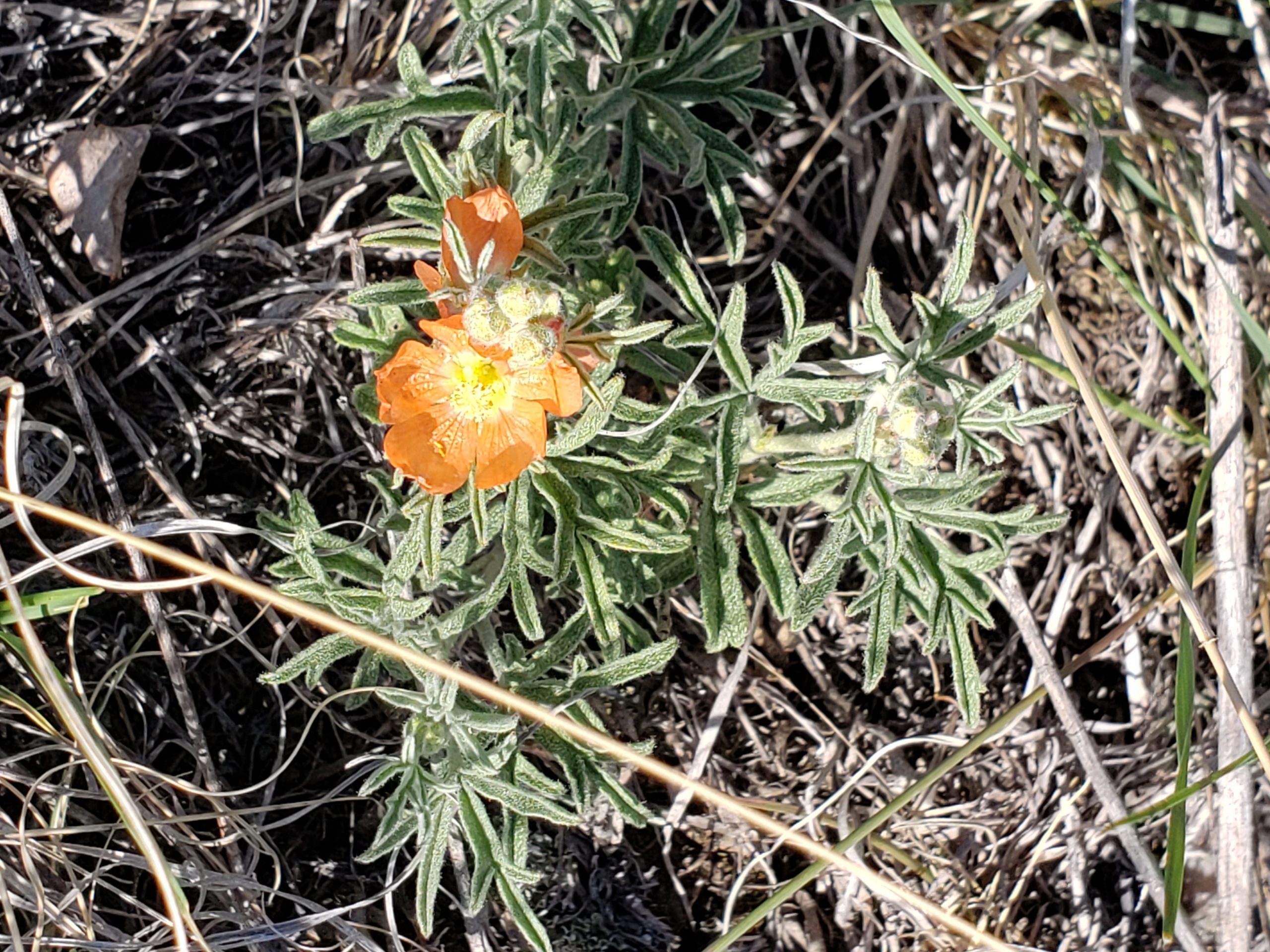
Scarlet Mallow
American Vetch
Short stemmed thistle
Meadow rue – found in the woods of Pheasant Creek
This is three flowered avens after blooming – you can see why it is called Prairie Smoke
The post Pheasant Creek – Early June Flowers appeared first on Poached Egg Woman.
In my humble opinion, June is the best month for wildflowers. There are so many new flowers coming to blossom, it is hard to keep up. Interesting seed heads to observe from earlier plants. The leaves of plants that are coming soon have emerged. It is also a beautiful month, unlike any other for startling prairie skies. Of course, the plants bloom long after my contrived two week time periods. And yet, keeping note of the plants as they bloom has me noticing more. The more I learn, the more I notice. The more I learn, the more questions I have. What a privilege it is to walk the same hills daily, to notice the ever changing plants and shrubs as well as the birds, animals and insects.
A beautiful year for wild roses
Gaillardia (or blanket flower)
Goatsbeard started to bloom at the beginning of June. the seedheads, like very large dandelion seed heads just came out at the end of June.
Ascending Purple Milk Vetch
Spreading Dogbane
Showy Locoweed. I have been admiring the furry leaves for many weeks. Finally, at the end of June, the first blossoms show up.
False Dandelion
Close up of Prickly Pear Cactus
Prickly Pear Cactus catching the last sun of the day
Harebell (and a small bit of bedstraw)
Western Wallflower (a member of the mustard family)
Caraway
Smooth Fleabane
Low Milkweed
Hedysarum (began blooming in early June)
Yarrow
Prairie Lily
Buckbrush
the plums of ground plum or are they?
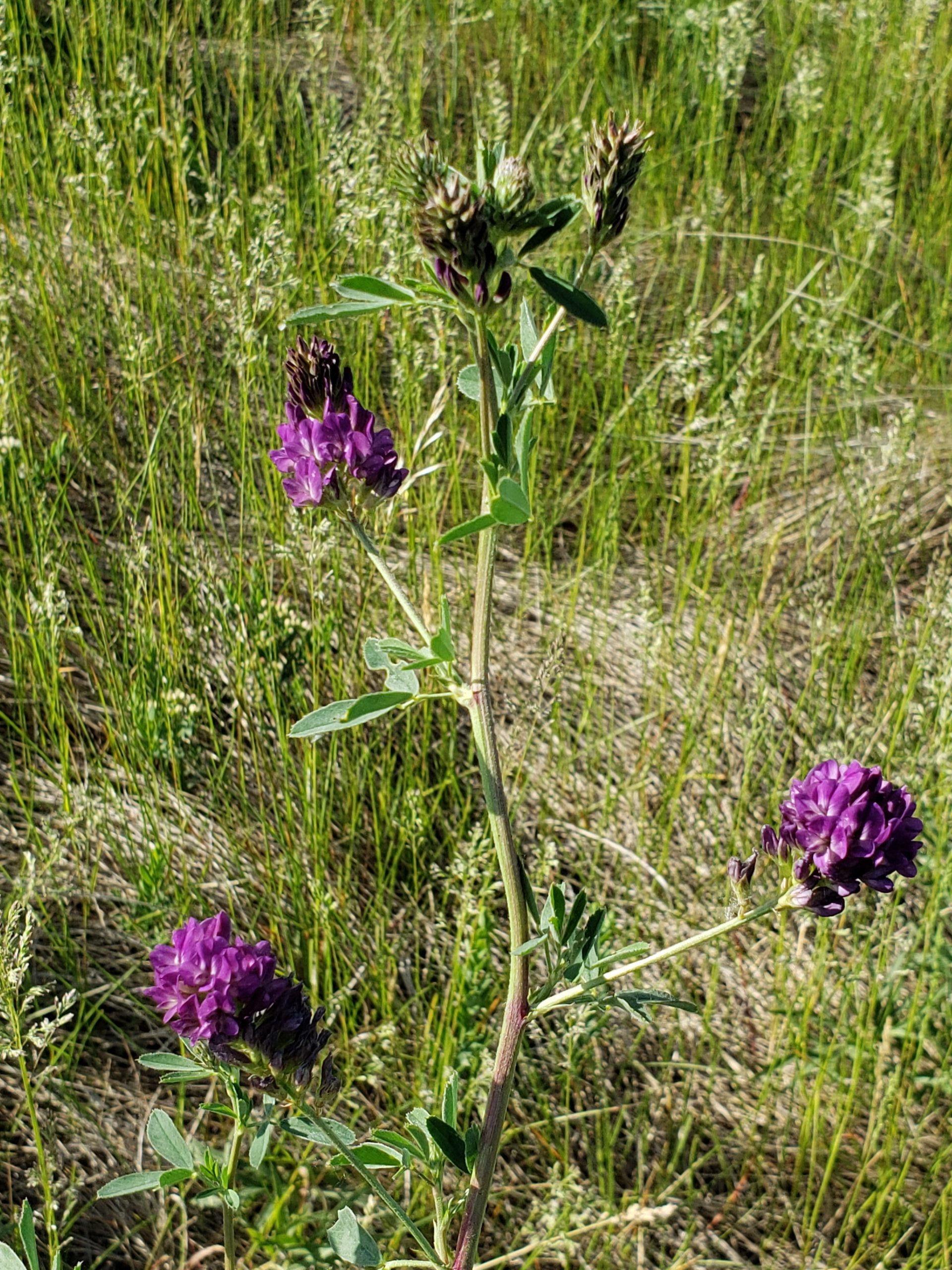
Alfalfa…this is in the meadow as I approach the hills. Many people haven’t seen it before and comment on her beauty- in all shades of purple and cream
Fritilitary enjoying alfalfa’s sweetness
Hawksbeard (not sure which one) with chamomile in background
White Water-Crowfoot
Nuttall’s Atriplex (Atriplex gardneri) Antelope, mule deer, rabbits, and mourning doves graze on it. Its leaves are an important food source during the winter because of their persistency. It is especially important for sheep because it contributes to the minimum nutritional requirement for maintenance of gestating female sheep
Just at the end of June, the first prairie coneflower blossoms
Low Goldenrod
Which vetch this is I am not sure
Sources: Saskatchewan Wildflowers Website by Glenn Lee and Facebook Page of Saskatchewan Native Plants- Saskatchewan Native Plant Society
The post Pheasant Creek – Late June Flowers appeared first on Poached Egg Woman.
|
Western Wild Bergamot
Western Wild Bergamot, a wonderful peppery leaf added to tea
Skeleton Weed
Hedysarum, above and Northern Hedysarum, below plus a little yarrow
Northern Hedysarum
Juniper is not a flower but so lovely and fresh with new berries coming
Low milkweed started blooming in June, but I am discovering patches of her for the first time, and she continues to bloom in July
Green Milkweed
Silvery groundsel going to seed…in this photo the seeds of the bottom three have flown away. I painted this seedhead last winter not knowing what is was
Smooth Camus, close up, new to me this year
Smooth Camus
Late Locoweed (see May for Early locoweed)
Harebells
Giant Hyssop
Skunk bush
Western Red Lily
Wild LIcorice
Brown Eyed Susan’s
Many flowered aster
Purple Prairie Clover – who could resist this plant?
White Prairie Clover, cousin to Purple Prairie Clover
Dotted Blazingstar
Short Stemmed Thistle
Short Stemmed Thistle
Field Geranium, naturalized
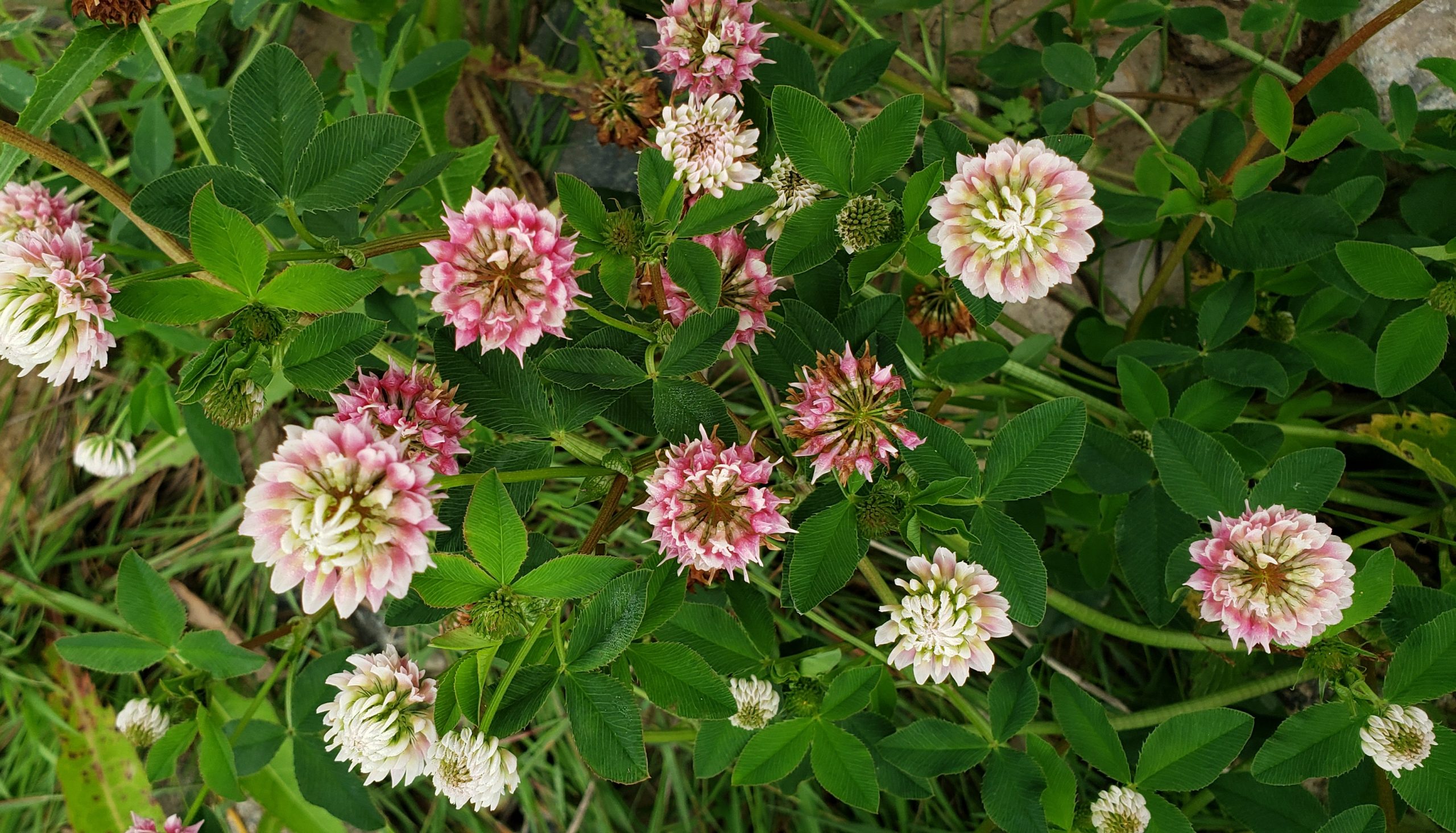
Red Clover
Plains Cinquefoil
Yellow Evening Primrose
Yellow Evening Primrose
 o
o 
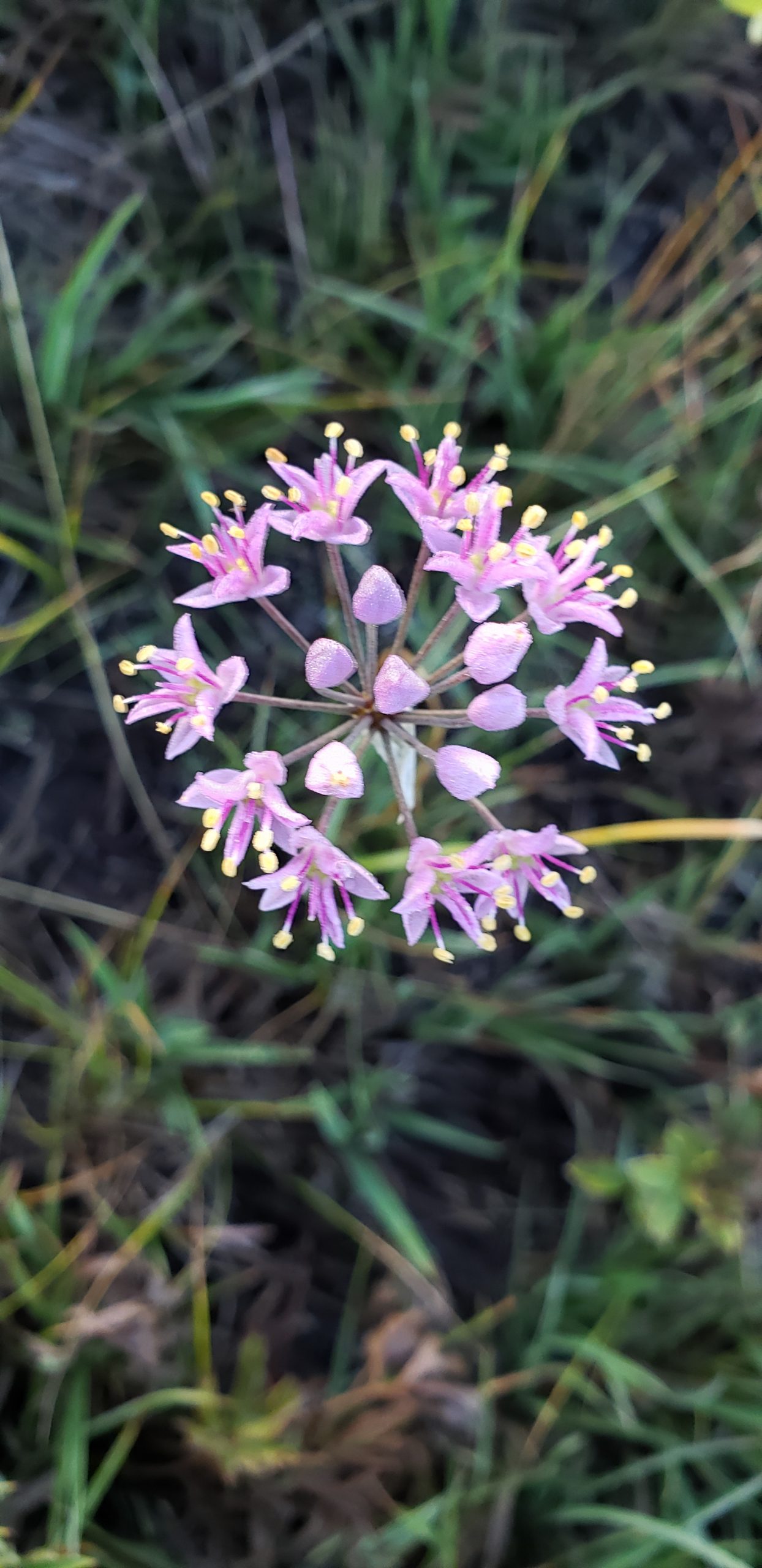
PInk flowered Onion
PInk flowered Onion
Gaillardia (Blanket Flower)
Spreading Dogbane
Showy Locoweed
Beautiful Sunflower
Silverleaf Psoralea
Smooth Aster
Prairie Coneflower
the seedhead of yellow flax
Hairy Golden Aster
“Underfoot”, Watercolour, 14.5 ” x 14.5″
“Early Morning”, Watercolour, 10″ x 8″

The post Pheasant Creek – Some July Wildflowers appeared first on Poached Egg Woman.
 Years ago I made a choice to let go of my perennial garden so that I could spend more time in Pheasant Creek Coulee with the wildflowers that were already there. Flowers requiring no care at all. I felt some sadness about this choice, but have been thrilled about the time it has freed up for me. I especially love to spend very early mornings painting in the coulee once the ticks have disappeared.
This Covid summer has been no exception. In fact, life without playshops and art sales has offered me not only MORE time in the coulee, but also daily visits! What I have most noticed is how the more I get to know, the more I realize I have not noticed before. How could I have missed that, I think? I note that I miss so many things. “I see, but don’t see”. There is always a new surprise or mystery when I visit the coulee. We see and experience the natural world with strong filters. Happily, daily visits disturb some of my filters.
Showy Locoweed (the flowers not out yet, but an impressive plant, so furry and luxurious!)
Showy Locoweed in bloom
A great joy has been wondering about the mystery of an emerging plant – before it blooms. Who are you? What colour will you be? In the case of Showy Locoweed, it was several weeks between emerging leaves and eventual blossoms. Well worth the wait!
Now, I am appreciating the varieties of seedheads, and finding great beauty in this stage of plant life. How can the delicate pink and white bell shaped flower of Spreading Dogbane become a brilliant red pod sometimes measuring four inches long?
Spreading Dogbane-the pod
Spreading Dogbane- flowers
These last few weeks, I have perched on my stool, looking down. I am intrigued by the shapes and forms and postures of plants. I have always loved the distinctive shape of Indian Breadroot* or the particular curve of milk vetch leaves on the stem. Or the deep green of Indian Breadroot contrasted with the silvery green of wolf willow and sage.
“Underfoot”, Watercolour, 14.5 ” x 14.5″
My first painting, entitled “Underfoot” highlights the leaves of Indian Breadroot when the blossoms are dying. In the background are the fading leaves of the prairie crocus. At this time ( early July) Ascending Purple Milk Vetch (blue) is in full bloom, as are Gaillardia (yellow) and Hedysarum (pink). Broom is just coming into bloom and it’s bright fake grass green colour contrasts with the other shades of green.
Detail of “Sylvia’s Prairie”
“Sylvia’s Prairie” was painted over several visits the last ten days of July. Silver Leaf Psoralea ( a cousin of Indian Breadroot) is highlighted in this painting and I love how its silver leaves contrast with the green of Western Wild Bergamot (shown here without blossom). Other blooming plants include Purple Prairie Clover, Harebell, Pink Prairie Onion, and Low Goldenrod. Flax seeds and the empty rust coloured seed heads of groundsel as well as wild licorice leaves are here also.
The title of this piece came as a wonderful surprise. Once I was finished and was looking at this painting from a distance, I thought, “These are Sylvia’s (my late mum) colours.” In fact, I could imagine her wearing a shirt just like this. I was struck by how our parents are always with us, even when we have no idea they are present. Years ago, when my mum visited the prairies, she loved to smell the sage. She always picked some to freeze in a baggie, and pull out from time to time, just to breathe that distinctive prairie smell deeply. So, it fits that two types of sage are in this painting as well – women’s sage and pasture sage.
In some ways, I am pleased with “Sylvia’s Prairie”. Yet, at the same time, some dissatisfaction pushes me to explore further. I like the energy and movement in an earlier attempt to get to know Silver Leaf Psoralea (below). I begin August wanting to spend more time getting to know Silver Leaf Psoralea better by sitting with her, drawing and painting her, trying to express other dimensions of her incredible beauty and wildness.
* Indian Breadroot i also known as Prairie Turnip.

The post Sylvia’ s Prairie appeared first on Poached Egg Woman.
Hawthornes- the haws are still available in Winter (my substitute for a photo of Saskatoons in winter)
Prelude
Early in December I was invited to take a meditative walk and see if something in the natural world caught my attention. What I especially noticed was how many Saskatoon berries were still on the bush. Most were dried like raisins. I ate a handful and found them full of taste. What a sweet surprise, I thought…after all, the birds, the squirrels, the bears and we humans ate our fill of Saskatoons in the summer, and yet, there were still some left over!! What abundance! How marvellous – to savour this summer taste as the days grow darker!
 A few weeks later, Robin Wall Kimmerer, published “The Service Berry: An Economy of Abundance” in Emergence Magazine. Wouldn’t you know it? The service berry is also called the Saskatoon berry! This excellent essay celebrates the abundance and gift of this “best of the berries”. Wall Kimmerer also explores gratitude, reciprocity and the gift economy using the Saskatoon bush as guide and teacher.
This essay struck me as beautiful medicine for the next decade, as well as a call to action or perhaps (worded differently) – an invitation to respond creatively and “live into” the community Robin Wall Kimmerer envisions. While some of us are anxious to return to “normal”, I think many of us would qualify “normal”. The pandemic has enabled us to see ever more clearly how our culture of excess has not served us well, and how it has favoured some at the expense of so many others and so much else (including care of the earth). Robin Wall Kimmerer is a wise visionary and leader, who so clearly articulates the need for a change in our priorities and direction. She does so poetically. Even better, we can read the essay or listen to her read it to us, or both!!
Here’s the invitation:
Please consider accompanying me as I read and listen to Robin Wall Kimmerer’s essay “The Service Berry: An Economy of Abundance” over the next few months. I have divided it into 4 sections, simply because there are many ideas here and reading over a longer period of time allows us to sink into these ideas. We will take approximately a month to read and respond to each section.
I invite you to comment on a particular quote (or quotes) that stirred something in you.
I also invite you to respond creatively, if you feel called to do so. You might feel called to respond to one section and not another. Or to all four. Or to none. All are good.
A perfect example of a creative response
What do I mean by responding creatively? Think of some of the creative people you know – people who decorate their homes with that special touch, poets, make up artists, beaders, ice lantern makers, cooks and bakers, welders, tattoo artists, wood workers, dancers, music makers, knitters and crocheters, story tellers, leaders in ceremony, healers, potters, sewers, seamstresses and quilters, entrepreneurs, song writers, mothers and fathers, aunties and uncles, graphic artists, tic toc creators, gardeners, worship leaders, cake decorators, photographers, people who dress with flair, nail artists, sculptors, gardeners, snow fort builders…the list could go on and on.
A creative response could also be an action – sharing a gift, taking care of a piece of land, nurturing a small garden, writing a letter, “paying it forward” in a way that nurtures connection. Receiving a gift could also be a creative response – for many of us receiving well is harder that giving or sharing. As Wall Kimmerer notes, we are receiving gifts all the time and sometimes we become alert or especially aware of a particular gift we have long taken for granted.
To some extent, we are already living into “an economy of abundance”. It feels to me that doing this together in response to Robin Wall Kimmerer’s essay brings a degree of intention and community which will make a difference for each of us, and perhaps ripple out.
Sharing Our Responses and Comments
Your comments and creative responses will be shared on a dedicated website (with your permission). I hope to get this website up this month (February 2021). I will send you the link to the website when it is available, and regular updates or reminders now and again. You can send your responses to me by email.
Other ways of becoming community may emerge naturally as we accompany each other in considering and living into Robin Wall Kimmerer’s ideas. If you have thoughts about how we might share our responses with each other, please send them on to me.
How To Join In
E- mail me at poachedeggwoman@gmail.com if you are interested in taking part in some way or have questions. You will receive an e-mail with a link to each section we are reading, and subsequent e-mails with links sharing how people are responding.
Feel free to share this with others who may be interested.
Here is a PDF of Section 1 of the essay – Robin Wall Kimmerer SECTION 1
Here is a PDF of Section 2 of the essay – Section 2 – Reading Robin’s Essay
Here is a PDF of Section 3 of the essay – Section 3- Robin’s Essay
Photo used with kind permission of Chantelle Bonk
The post Invitation: Living into “An Economy of Abundance” appeared first on Poached Egg Woman.